
You’re brushing your teeth before bed. You spit out the toothpaste, and there it is: pink in the sink. A little blood when you brush. No big deal, right? Actually, it’s a bigger deal than most people realize.
At Davidsonville Dental Group, patients often mention bleeding gums almost as an afterthought. “Oh, and my gums bleed sometimes when I brush, but it doesn’t hurt.” That casual comment tells us something important: your gums are trying to get your attention.
Here’s what that bleeding really means and why you shouldn’t ignore it.
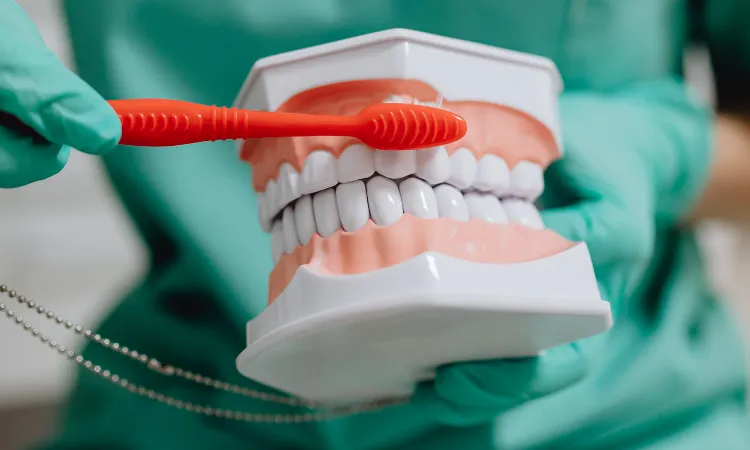
The Main Culprit: Plaque Buildup
Your mouth is home to millions of bacteria. Some are harmless. Some aren’t. When bacteria mix with food particles and saliva, they form a sticky film called plaque. That plaque settles along your gumline, and your gums don’t like it.
Your body treats plaque like an invader. Your immune system sends inflammation to the area to fight off the bacteria. That inflammation makes your gum tissue tender, puffy, and more likely to bleed. It’s essentially a low-grade infection happening right where your teeth meet your gums.
This early stage is called gingivitis. The good news? It’s completely reversible with better daily cleaning and a professional cleaning in our office. The bad news? If you ignore it, gingivitis can turn into periodontitis, a more serious gum disease that damages the bone supporting your teeth.
Other Reasons Gums Might Bleed
While plaque is the most common cause, it’s not the only one. Here are other possibilities worth considering:
- Your brushing or flossing technique needs adjustment. Brushing too hard can actually injure your gums. So can using a toothbrush with hard bristles. On the flip side, if you’ve avoided flossing for a while and suddenly start again, some bleeding is normal for the first week or so as your gums get used to the cleaning.
- Certain medications thin your blood. Blood thinners, some blood pressure medications, and even aspirin can make your gums more likely to bleed. Always let us know about every medication you take.
- Hormonal changes during pregnancy can make gums more sensitive and prone to bleeding. This is common and usually resolves after pregnancy, but good oral hygiene becomes even more important during this time.
- A vitamin C or vitamin K deficiency can affect how your gums heal and how your blood clots. Most people get enough through diet, but it’s worth mentioning to your primary care doctor if bleeding persists despite good oral hygiene.
- Smoking and tobacco use mask the signs of gum disease, meaning your gums might not bleed even when they should. This can delay treatment until the disease is quite advanced.
When Bleeding Gums Mean Something More Serious
Here’s where bleeding gums stop being an annoyance and start being a real health concern. Research has linked gum disease to several systemic health conditions, including heart disease, diabetes complications, and even some pregnancy complications.
The inflammation in your mouth doesn’t stay in your mouth. Those inflammatory chemicals enter your bloodstream and travel throughout your body, potentially contributing to inflammation elsewhere. Your oral health truly is connected to your overall well-being.
What You Can Do Today
First, don’t stop brushing or flossing just because you see blood. That’s the opposite of what your gums need. Keep cleaning gently and thoroughly.
Switch to a soft-bristled toothbrush if you haven’t already. Brush at a 45-degree angle toward your gumline using gentle circular motions. And yes, floss every day. Slide the floss gently up and down against each tooth rather than snapping it into your gums.
Second, schedule an appointment with us. Drs. Marc, Woody, and Joe want to take a look, measure your gum pockets, and see exactly what’s happening. We might recommend a deep cleaning called scaling and root planing to remove plaque from below your gumline where your toothbrush can’t reach.
Third, don’t wait. Bleeding gums rarely get better on their own. They almost always get worse.
Your Gums Are Trying to Tell You Something
That pink in the sink isn’t normal. It’s your body sending a message that something needs attention. The good news is that most gum bleeding responds beautifully to professional care and improved home habits.
If your gums bleed when you brush or floss, call our Davidsonville office at (410) 343-7075 or request an appointment online. We’ll get you in for an evaluation, give you honest feedback about what’s happening, and create a plan to get your gums back to healthy. You’ll be surprised how quickly that pink disappears when your gums get the care they deserve.